
Building a Home Ready for a Low Carbon Future
Net zero homes are designed to use less energy, reduce reliance on fossil fuels and make greater use of cleaner technologies. For homeowners, that does not necessarily mean rebuilding a property from scratch. Improvements such as insulation, solar panels, battery storage, heat pumps, and smart energy controls can all help an existing home move towards a lower-carbon future.
The UK has a legally established goal of reaching net zero greenhouse gas emissions by 2050, and reducing emissions from homes is an important part of that transition. Government figures show that domestic dwellings account for around 13% of UK greenhouse gas emissions.
For homeowners in Scotland, the timetable is even more ambitious. Scotland’s current Climate Change Plan sets a target to decarbonise buildings by 2045, rather than 2050.
The key point is that becoming a lower-carbon home is usually achieved through several sensible improvements working together rather than one single technology.
What Does a Net Zero Home Actually Mean
A net zero home aims to minimise the greenhouse gas emissions associated with the energy it uses. In practice, this means first reducing unnecessary energy demand and then moving away from fossil-fuel technologies where suitable alternatives are available.
The UK Government’s Heat and Buildings Strategy explains that improving the energy performance of buildings is important for keeping homes comfortable, reducing energy demand, and making the transition to low-carbon heating easier.
For an existing home, this might mean improving insulation first, then looking at technologies such as a heat pump, solar PV, battery storage or smart controls.
This is particularly relevant in Scotland. According to the Scottish Government’s current energy efficiency policy, improving efficiency alone will not be enough to reach net zero. Homes will also need to move away from polluting heating systems towards cleaner alternatives.
How Solar Panels and Battery Storage Reduce Grid Reliance
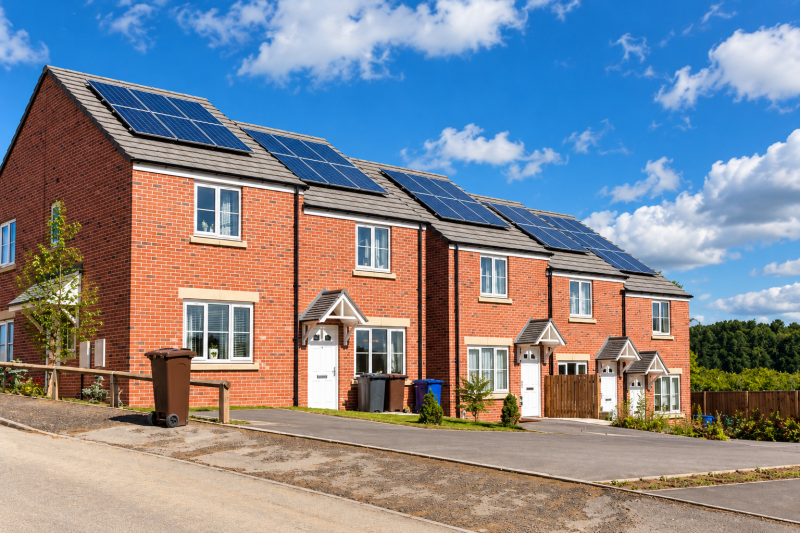
Solar panels can help a home generate some of its own renewable electricity instead of buying everything from the grid.
According to the Energy Saving Trust’s solar panel guidance, solar PV generates renewable electricity that can be used directly in the home. Solar panels can also be combined with heat pumps and electric vehicles, helping households use their own generation for more of their energy needs.
Battery storage can take this a step further.
The Energy Saving Trust’s battery storage guidance explains that batteries can store electricity generated by solar panels during the day so that it can be used later, including during the evening when solar generation has fallen.
Battery storage can therefore help a home make greater use of its own renewable electricity and reduce the amount it needs to import from the grid.
For homeowners looking towards a net zero home, the important part is how these technologies work together. Solar generates the electricity, battery storage helps shift when it is used, and smart controls can help decide when electricity should be generated, stored or consumed.
Why Low Carbon Heating Matters
Heating is one of the biggest areas that needs to change as UK homes move towards net zero.
The UK Government’s Net Zero Technology Outlook states that the heat and buildings sector accounts for around 19% of greenhouse gas emissions, with residential buildings responsible for most emissions within that sector.
Heat pumps are one of the main technologies expected to help reduce those emissions.
Instead of burning fuel to create heat, a heat pump moves heat from the outside air or ground into the home. The UK Government identifies heat pumps as an important low or zero-carbon heating solution for residential buildings as the electricity grid becomes cleaner.
This is where energy efficiency becomes important. A well-insulated home generally requires less energy to stay comfortable, helping a correctly designed heat pump operate effectively.
For homeowners considering several upgrades, solar panels can also work alongside a heat pump. The Energy Saving Trust explains that using solar PV to provide some of the electricity required by a heat pump can help reduce both electricity and heating costs.
Common Questions About Net Zero Homes
- Does my home need to produce all its own electricity to be net zero? Not necessarily. The wider aim is to reduce energy demand and move towards cleaner energy and heating rather than making every property completely independent from the grid.
- Do I need solar panels and a heat pump at the same time? No. Improvements can be made gradually. The right order depends on your property, existing heating system, insulation and energy use.
- Can an older home become a low carbon home? Yes. The challenge can be greater for older properties, but improvements to insulation, heating and renewable generation can still significantly reduce energy use and emissions. Scotland’s current Climate Change Plan specifically recognises that older and traditional properties need tailored approaches.
- Is battery storage essential for a net zero home? No, but it can help you use more renewable electricity at home and make your energy system more flexible. The Energy Saving Trust explains that batteries can store renewable electricity for use when it is needed later.
- Is the target 2050 everywhere in the UK? No. The overall UK target is net zero by 2050, while Scotland has set a target of reaching net zero by 2045.
Bringing Renewable Technologies Together
A net zero home is not simply a house with solar panels on the roof. The best approach is to look at the property as one connected energy system.
Insulation can reduce how much energy the home needs. A heat pump can provide lower-carbon heating. Solar panels can generate renewable electricity. Battery storage can save surplus electricity for later. Smart meters and controls can then help manage when that energy is used.
The Energy Saving Trust explains that battery storage can even be used to power a heat pump later in the day with solar electricity generated earlier.
We explore this connected approach in our Smart Homes Smart Savings, covering how solar panels, batteries, EV charging, heat pumps and smart controls can work together as part of a more efficient home energy system.
For most homeowners, the aim should not be to install every technology immediately. It should be to understand where the biggest improvements can be made and create a sensible plan that allows the home to become more efficient over time.
Making Your Home Part of the Net Zero Transition
Net zero homes will play an important role in the UK’s move towards its 2050 climate target and Scotland’s earlier 2045 goal.
For individual homeowners, the transition can be much more practical than the phrase “net zero” might suggest. Improving insulation, replacing fossil-fuel heating where appropriate, generating electricity with solar panels and storing renewable energy can all move a home in the right direction.
Smart Living Energy can assess your property and help you understand which renewable and energy efficiency improvements are suitable for your home rather than recommending a one-size-fits-all solution.
To keep reading, follow on with our guide with How to Make Your Home Net Zero in 5 Simple Steps for a practical breakdown of the main improvements homeowners can consider.
Please contact us to find out more.
Email – info@smartliving.energy
Telephone – 0800 008 6209